Getting Started
Data Marketplace
Data Marketplace Introduction
Syncport Data Marketplace 2026
Overview
The Syncport Data Marketplace enables individuals, companies, and devices to monetize data by publishing it as onchain assets that can be accessed and paid for by AI systems, autonomous agents, and enterprises.
Instead of data being extracted without compensation, Syncport introduces a permissionless market where data producers get paid automatically when their data is used.
This marketplace is natively built on Syncport and secured by Ethereum.
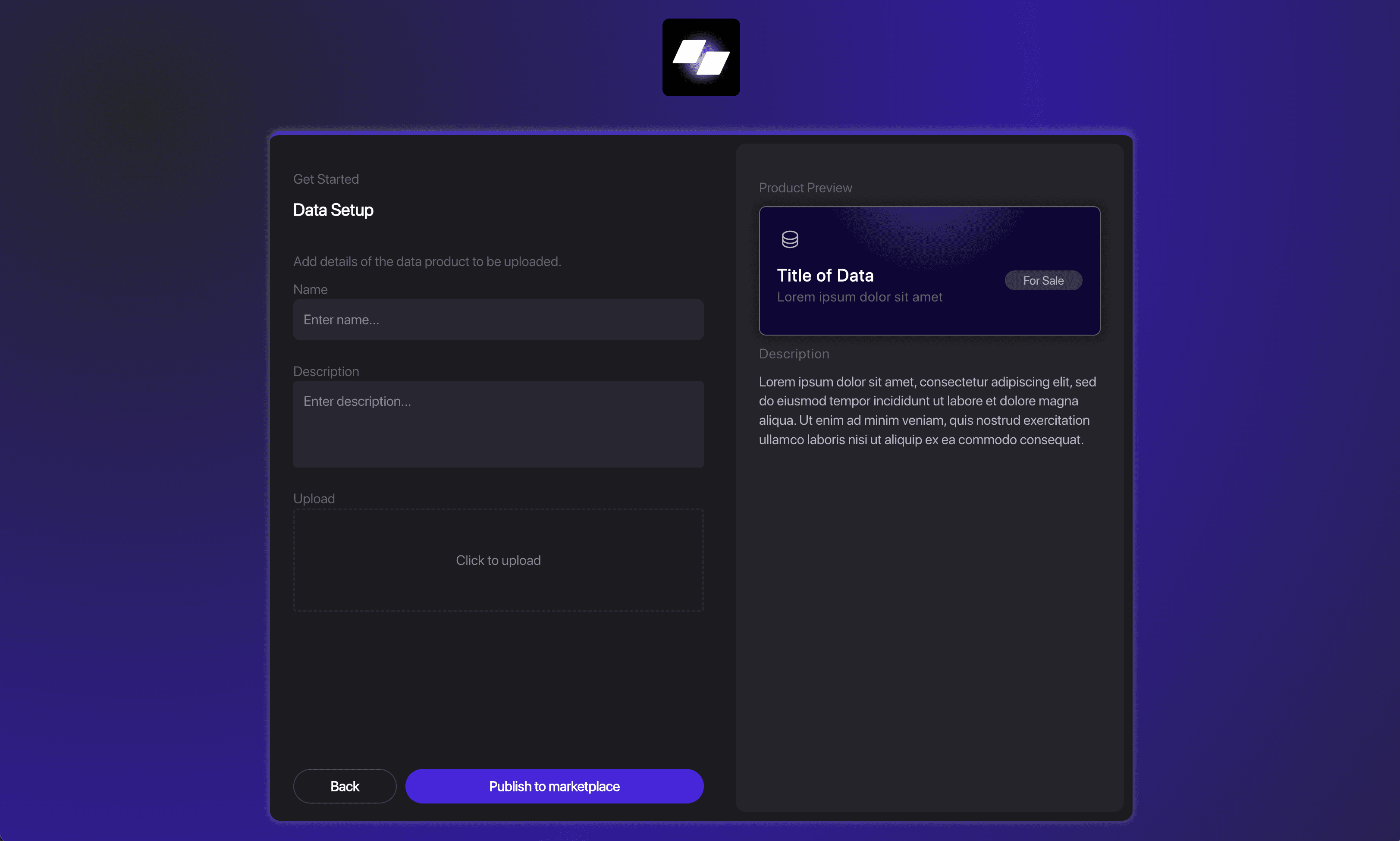
What Is the Data Marketplace?
The Data Marketplace is a decentralized exchange for data.
It allows data owners to:
Publish datasets or live data streams
Define pricing and access rules
Control how data is used
Earn automated payments per usage
It allows buyers to:
Discover high-quality data
Pay per query, stream, or license
Access data instantly via APIs or streams
Use data for AI training, inference, analytics, or automation
No contracts. No intermediaries. No sales calls.
Who Is It For?
Data Providers
Individuals with historical data (content, logs, media, activity)
Companies with proprietary datasets
IoT devices and sensors
Robotics platforms
SaaS platforms generating structured data
Data Buyers
AI model developers
AI agents and autonomous systems
Robotics companies
Research labs
Enterprises needing real-time or historical data
Types of Data Supported
Static Datasets
CSV, JSON, Parquet, media files
Historical records
Labeled training data
Archived logs
Live Data Streams
Real-time sensor data
Blockchain data streams
Application events
Device telemetry
Robotics and automation signals
On-Demand APIs
Query-based access
Usage-metered endpoints
Machine-to-machine data calls
Publishing Data
Step 1: Create a Data Asset
Data providers register a dataset or stream on Syncport by creating a Data Asset.
Each Data Asset includes:
Name and description
Data type (dataset, stream, API)
Schema or format
Access method (download, stream, query)
Usage terms
Step 2: Set Pricing
Providers define how they get paid:
Per query
Per API call
Per stream subscription
One-time license
Time-based access
Pricing is enforced onchain.
Step 3: Control Access
Providers maintain full control:
Allow or restrict buyers
Limit usage rates
Revoke access at any time
Set expiration rules
Buying Data
Discover
Buyers browse the marketplace or query via API to discover available data assets.
Pay
Payments are handled natively on Syncport:
Pay per use
Pay per stream
Pay per license
Manual purchases supported for enterprises
Access
Once payment is made:
Access is granted automatically
APIs or streams unlock instantly
Usage is metered onchain
Payments & Settlement
Payments are atomic and trustless
Fees are settled per usage
Data providers are paid automatically
Supports AI-to-AI and machine-to-machine payments
Designed for x402-style microtransactions
Syncport removes billing systems, invoicing, and reconciliation entirely.
Ownership & Rights
Data providers retain full ownership
Syncport does not take custody of raw data
Usage rights are enforced by smart contracts
Buyers receive access, not ownership
Privacy & Security
Data access is permissioned
Encryption supported for private datasets
Onchain records provide auditability
No centralized data broker
Enterprise & Manual Purchases
In addition to automated access, companies can:
Purchase datasets manually
Negotiate custom licensing
Integrate private APIs
Access dedicated data streams
This allows Syncport to support both autonomous AI systems and traditional enterprises.
Use Cases
Get paid when AI trains on your data
Monetize sensor and device output
Turn internal company data into a revenue stream
Power autonomous agents with paid data feeds
Create recurring revenue from historical data
Why Syncport
Built specifically for AI and robotics
Native data + payment infrastructure
No intermediaries
Ethereum-secured
Designed for autonomous commerce